

I keep my news, investigations, and analysis free and accessible to everyone. If you value my work, your support makes it possible for me to keep doing it. Please like, comment, share, and subscribe.
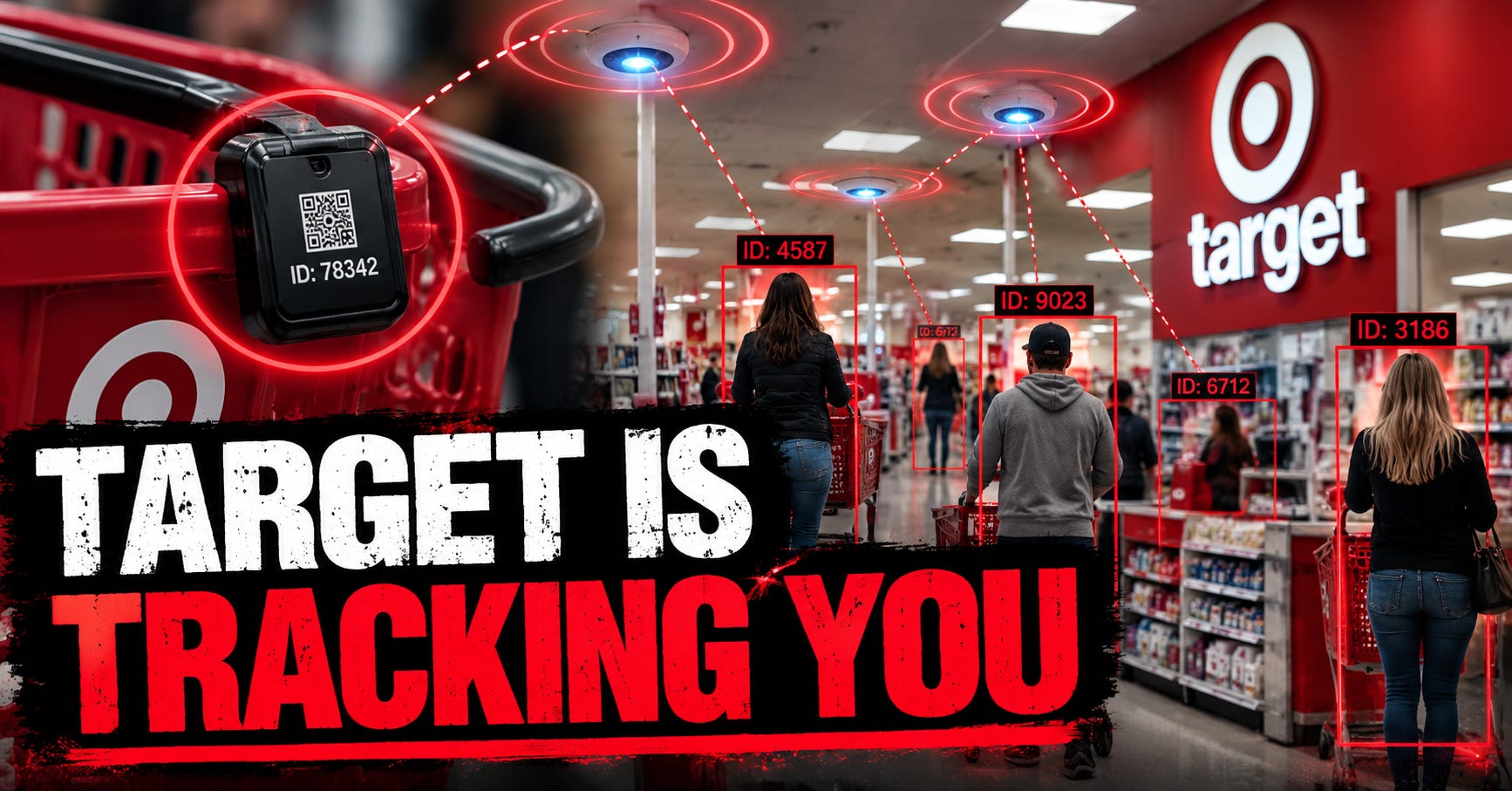
Welcome to another episode of black mirror, except this time it’s real life, and Target is tracking your every move through its shopping carts and baskets.
Apparently, we’ve reached the point where you can’t even walk into a grocery store and buy a carton of milk without some giant, evil corporation wanting to document your every movement.
A Target employee recently posted a video on TikTok showing a small black device attached to one of the store’s shopping baskets. The device had an identification number printed on it, which was traced back to Acuity Brands, the same company that manufactures Target’s ceiling lights.
And here’s where this gets interesting.
That little black device is a Bluetooth tracker designed to monitor how customers move throughout a store. Acuity Brands openly advertises this technology to retailers, explaining that the devices can be attached to shopping carts to track customers’ movements, analyze their shopping behavior, and even monitor employees.
But how exactly are they tracking you?
THROUGH THE LIGHTS ABOVE YOUR HEAD.
Target installed Acuity lighting systems equipped with Bluetooth technology in nearly half of its 1,800 stores. The trackers attached to shopping baskets communicate with the Bluetooth-enabled lights overhead, allowing the system to monitor where a basket travels throughout the store.
And according to Acuity, this technology works without you ever downloading an app or agreeing to be tracked.
Now, these particular devices supposedly aren’t extracting information from your phone. They’re tracking the movement of the basket itself. But when you start looking at Target’s own privacy policy, you begin to understand just how much information this corporation is collecting about its customers.
Target openly acknowledges collecting information about your location INSIDE its stores, and its privacy policy allows that information to be connected with your online activity, the websites you visit, the advertisements you’re shown, and even your email address.
And that’s hardly the extent of it.
I keep my news, investigations, and analysis free and accessible to everyone. If you value my work, your support makes it possible for me to keep doing it. Please like, comment, share, and subscribe.
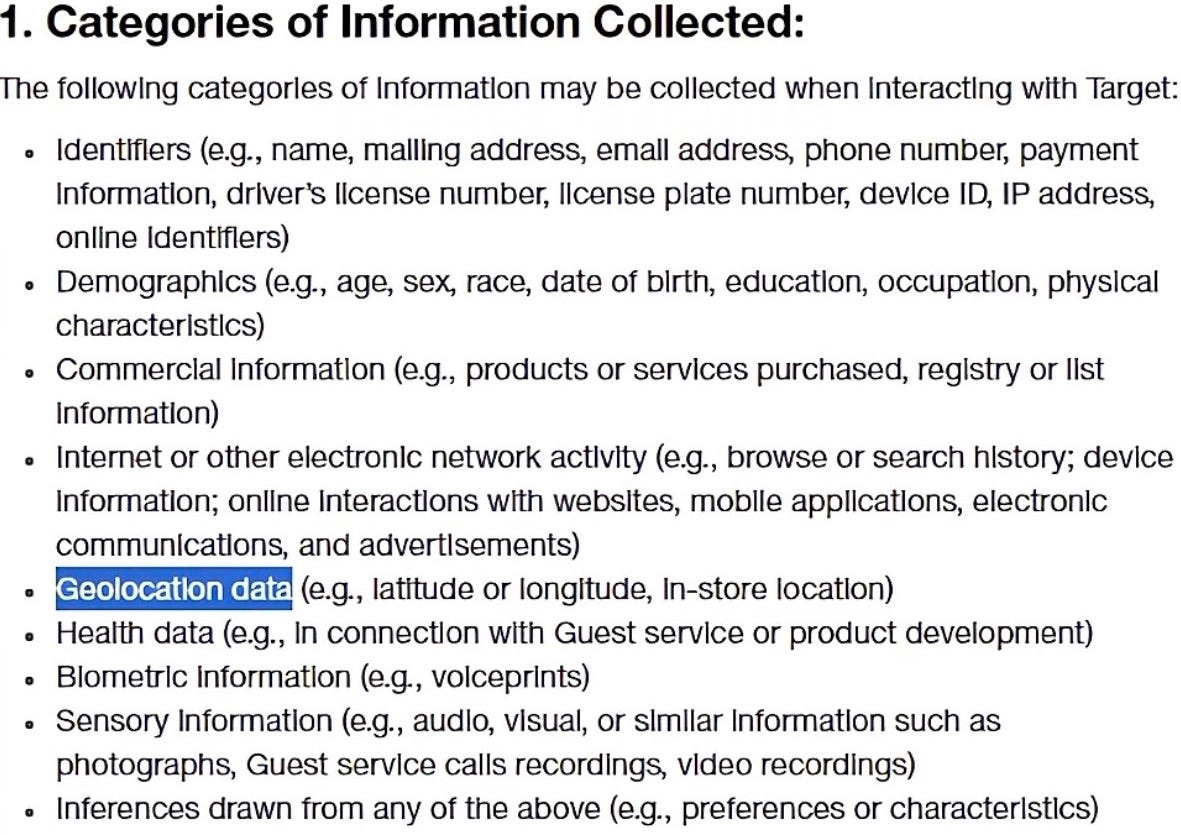
The same privacy policy describes license plate recognition cameras at its stores, the collection of biometric information such as voiceprints, purchasing personal information from third-party data brokers, and using collected information to train artificial intelligence models.
So we’re talking about a corporation that can collect information about where you shop, what you purchase, where you move throughout its stores, what you do online, and potentially connect those different pieces of information to build an increasingly detailed profile of you.
And if you think all this surveillance is just about improving your shopping experience, consider what Target has already been caught doing with its app.
A Minneapolis news station actually caught Target displaying different prices for the exact same products depending on where customers were physically standing. Reporters compared the prices of ten items on Target’s app while standing in the store’s parking lot, then checked those same items again after walking inside. The total price jumped by $262 simply because they had entered the store.
The exact same products, at the exact same store, could cost you hundreds of dollars more simply because of your physical location. And unless you happened to check the prices before walking inside, you might never have known you were being shown a different price.
And now we’re discovering technology designed to track your movements down to the shopping basket you’re carrying.
We’ve reached a point where corporations aren’t satisfied with knowing what you purchase. They want to know where you go, how long you spend looking at something, what catches your attention, what advertisements influence you, and how much money they can extract from you.
And the most disturbing part is how much of this surveillance is happening without the average person having the slightest idea it’s even taking place.
At what point did we collectively agree that buying groceries should involve being monitored, analyzed, and turned into another source of data for corporations to profit from?
Relevant reading:


If you’re tired of being told everything is fine while it clearly isn’t, you’re exactly why this publication exists.
My work is 100% reader-supported. That means no advertisers, no political handlers, and no incentive to soften the truth.
I started this because too many people feel like they’re losing their minds trying to make sense of what’s happening, myself included. I wanted to build a space of like-minded people to make this journey feel less lonely for all of us.
To allow me to continue posting content just like this, please consider becoming a paid subscriber. I’m running a special for $40/year or $5/month.
If that price feels impossible to you, I understand. Share this article with everyone you know, it costs nothing but it matters more than you could possibly know.
I keep my news, investigations, and analysis free and accessible to everyone. If you value my work, your support makes it possible for me to keep doing it. Please like, comment, share, and subscribe.


