

Warning: extremely disturbing content.
I keep my news, investigations, and analysis free and accessible to everyone. If you value my work, your support makes it possible for me to keep doing it. Please like, comment, share, and subscribe.
Terrifying reports are filtering through the British, French and American occupied zones, and even more gruesome reports from the Russian occupied zone, revealing a horrifying picture of deliberate and wholesale starvation…The truth is that there are thousands upon thousands of tons of military rations in our surplus stockpiles that have been spoiling right in the midst of starving populations.
- Senator Kenneth Wherry of Nebraska
Germany’s War pp.311-312
The end of World War II is usually where this story stops. The concentration camps were liberated, Germany was defeated, and the nightmare was over.
Except for thousands of Germans, it wasn’t.
Across Allied-controlled Germany, Poland and Czechoslovakia, concentration and internment camps continued operating after the German surrender, only now Germans were being imprisoned inside them. And as you’re about to see, the records describe starvation, beatings, torture, sexual abuse, forced labor and tens of thousands of deaths.
Between 12 and 14 million Germans were ethnically cleansed after World War II. Half a million were murdered for the crime of speaking German. Children were lined up and shot. Hundreds of thousands were thrown into the same camps the Germans had used; where they were tortured and deliberately starved to death.
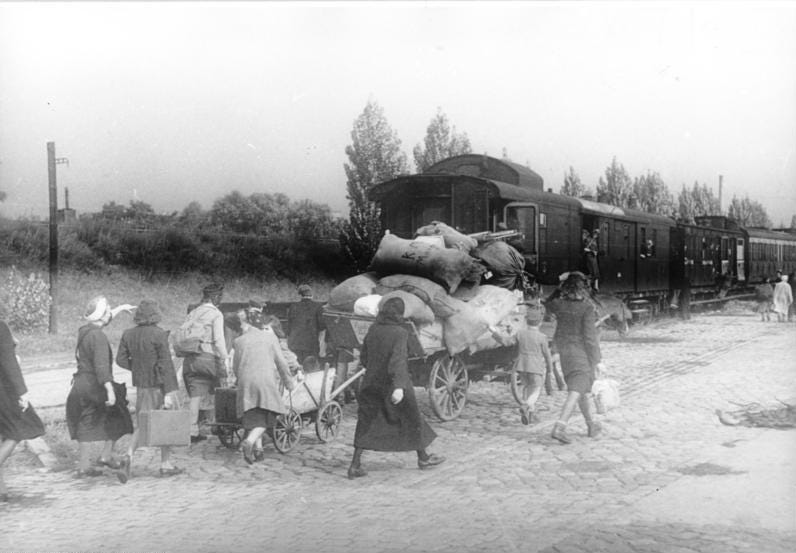
The atrocities committed against the defeated German population were among the most breathtakingly sadistic ever inflicted on a defeated people.
And yet, Americans don’t hear a word about it in school.
Even more to the point, many of the crimes against humanity committed against Germans after the war were the very same crimes the Allies had used to justify their own actions. That reality completely undermines the mythology that the Allies were simply the “good guys,” marching across Europe in the name of “freedom and international law.”
In reality, the Allies were brutal, merciless warlords. They weren’t fighting for some righteous moral cause.
Because if this really was a war between good and evil, how do you explain the supposed “good guys” turning around after Germany was defeated, and committing crimes against German civilians that echoed crimes for which they had condemned the Germans?
POSTWAR CRIMES COMMITTED IN ALLIED-RUN CONCENTRATION CAMPS
The Allies continued operating Germany’s existing concentration camps after World War II. Additional camps used to intern ethnic Germans were established in Poland, Czechoslovakia, Hungary, Romania and Yugoslavia.
And the sheer scale of this is something most people have never been told.
The population of the German concentration-camp system had already reached a record peak of more than 700,000 prisoners at the beginning of 1945. By the end of that same year, it is possible that the number of Germans incarcerated in similar camps across Europe was even higher.1
I keep my news, investigations, and analysis free and accessible to everyone. If you value my work, your support makes it possible for me to keep doing it. Please like, comment, share, and subscribe.
Soviet-Run Camps
Before we get into what happened inside these camps, it is paramount that you understand who was actually running them and how the Soviet secret-police apparatus operated. Most are under the impression that ethnic Russians ran the Soviet government and Gulag system and this isn’t true.
The Soviet secret police went through numerous names over the decades, including the Cheka, OGPU, GPU, NKVD, NKGB, MGB and eventually the KGB.
In The Gulag Archipelago, Aleksandr Solzhenitsyn detailed members of this Soviet secret police, including Aron Solts, Yakov Rappoport, Lazar Kogan, Matvei Berman, Genrikh Yagoda and Naftaly Frenkel.
All six were Jews.
In fact, every head of the secret police under Josef Stalin was a Jew.
Moisei Solomonovich Uritzky, a Jew, was also the Cheka’s first chief.
Read the linked article for more details on this. There’s no paywall.

Now that we’ve gotten that out of the way, let’s get into what happened inside the camps themselves.
The concentration camps at Buchenwald, Sachsenhausen, Mühlberg, Fürstenwalde, Lieberose, Bautzen and others were taken over and incorporated into the Soviet camp system (Gulags).
Buchenwald is perhaps the most disturbing example because Buchenwald did not close when Nazi Germany fell. The Soviets took it over, renamed it “Special Camp No. 2” and continued operating it until 1950.2
Conditions inside the Soviet-controlled camps were atrocious. They were designated “special” camps because Soviet authorities insisted that the prisoners be almost completely cut off from the civilian population.⁴
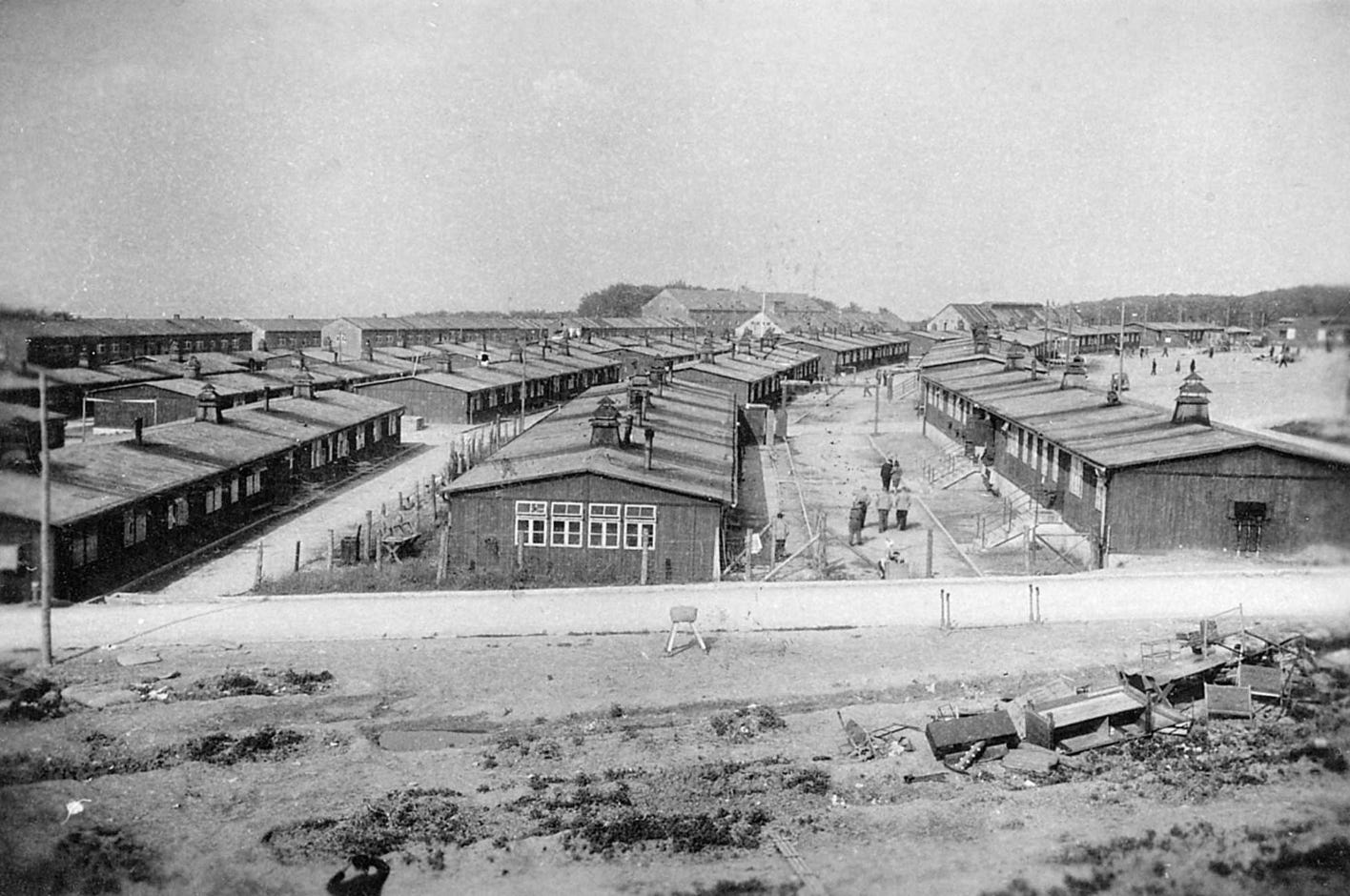
One former inmate described the five years he spent imprisoned inside Soviet-run Buchenwald:
Conditions inside the Soviet-controlled camps were atrocious. They were designated “special” camps because the Soviets insisted that the prisoners be almost completely cut off from the civilian population.3
Even Gen. Merkulov, the Soviet official responsible for the concentration camps in Germany, acknowledged the severe problems with sanitation and order, particularly at Buchenwald.4
One former inmate described the five years he spent imprisoned inside Soviet-run Buchenwald:
People were mere numbers. Their dignity was consciously trampled upon. They were starved without mercy and consumed by tuberculosis until they were skeletons. The annihilation process, which had been well tested over decades, was systematic. The cries and groans of those in pain still echo in my ears whenever the past comes back to me in sleepless nights. We had to watch helplessly as people perished according to plan—like creatures sacrificed to annihilation.
Many nameless people were caught up in the annihilation machinery of the NKVD after the collapse of 1945. They were herded together like cattle after the so-called liberation and vegetated in the many concentration camps. Many were systematically tortured to death. A memorial was built for the dead of the Buchenwald concentration camp. A figure of death victims was chosen based on fantasy. Intentionally, only the dead of the 1937-1945 period were honored. Why is there no memorial honoring the dead of 1945 to 1950? Countless mass graves were dug around the camp in the postwar period.5
While nobody can know the exact number of prisoners and deaths at Buchenwald, the figures cited by Viktor Suvorov, a former Soviet GRU officer, are staggering.
Suvorov estimates that approximately 28,000 people were imprisoned by the Soviets at Buchenwald between 1945 and 1950, and that roughly 7,000 of them died.
That is 25 percent of the prisoners.
For comparison, Suvorov estimates that approximately 250,000 people were imprisoned at Buchenwald under German control between 1937 and 1945, with approximately 50,000 deaths, or roughly 20 percent.
Meaning, the Soviet controlled Buchenwald had a higher death rate than the German controlled Buchenwald.6
And Suvorov’s estimate of the deaths under Soviet control may actually be understated. Other sources estimate that at least 13,000 and possibly as many as 21,000 people died at Soviet-run Buchenwald.7
A June 1945 U.S. detailed government report of German-run Buchenwald put the total deaths at 33,462, of whom more than 20,000 died in the chaotic final months of the war.
These deaths include at least 400 inmates killed during British bombing raids.8

The death-rates at the Soviet run Buchenwald versus the German run Buchenwald is probably substantially higher than Suvorov’s estimates.
And Buchenwald was only one piece of it.
Even according to the official Russian numbers, 122,671 Germans passed through Soviet run camps in the Soviet Zone after the war and 42,889 died inside them.
That is more than one out of every three prisoners.
But American military intelligence units and Social Democratic Party groups investigating these camps in the late 1940s and 1950s believed the official Soviet numbers seriously understated what had happened. Their estimates were almost twice as high: roughly 240,000 German prisoners, with 95,643 dead, nearly 40%.
And some camps were far worse than that.
At Sachsenhausen, 26,143 of an estimated 60,000 prisoners died. At Buchenwald, it was 13,200 out of 30,600.
Then there was Bautzen. Around 30,000 prisoners were sent there. 16,700 died.
More than half.
These estimates weren’t based on numbers pulled out of thin air. Numerous mass graves containing Germans were discovered near the Soviet-run camps, lending further support to the higher death count.9
Yet after tens of thousands of people died in these camps, no one was ever punished for the deaths or mistreatment of the German prisoners.
Hundreds of thousands of people visit Buchenwald every year, where they are shown museums and memorials dedicated to the “victims of fascism.” What they won’t find is a memorial for the thousands of Germans who died at Buchenwald after the war, when the camp was taken over and operated by the Soviet Communists.10
And they certainly won’t spend any time talking about who was actually running the Soviet apparatus responsible for these camps. Americans are constantly taught to associate the brutality of the Soviet Union with “the Russians,” particularly when we talk about what happened during the twentieth century. But you will never hear the mainstream media examine the ethnic backgrounds of the individual officials responsible for that system. Instead, all of that history gets flattened into one word: Russians.
I keep my news, investigations, and analysis free and accessible to everyone. If you value my work, your support makes it possible for me to keep doing it. Please like, comment, share, and subscribe.
POLISH-RUN CAMPS
Reminder: Jewish journalist John Sack documented the torture and killing of German prisoners inside postwar Polish camps operated by the Office of State Security. Most of the camps were staffed and run by Jews, with help from Poles, Czechs, Russians, and concentration camp survivors.
Virtually all of the personnel at these camps were eager to take revenge on the defeated Germans. In three years after the war, Sack estimates that 60,000 to 80,000 Germans died in the Office’s camps.
In March 1945, the Polish military command declared that the German people collectively shared responsibility for starting World War II. What followed was the mass internment of ethnic Germans living in Poland. Before they were eventually expelled from the country, more than 105,000 Germans were sent to labor camps.
And many of these people weren’t being sent to newly constructed facilities.
Polish authorities took over former German concentration camps, including Auschwitz-Birkenau and Łambinowice, known as Lamsdorf to its German occupants, and converted them into internment and labor camps for Germans.
The turnaround at Auschwitz was almost immediate.
Less than two weeks separated the liberation of the last surviving Jewish prisoners in the Auschwitz main camp from the arrival of the first ethnic German prisoners.
I don’t think most people have any idea this happened. Auschwitz had barely been liberated before ethnic Germans began arriving as the camp’s new prisoners.
And the people being sent into these postwar camps weren’t exclusively German soldiers or Nazi officials. Many of the inmates were women and children.
By the time the camps in Poland were finally closed, it’s estimated that the death toll was as high as 50% of the inmates, with prisoners dying from poor treatment, malnutrition and disease, most of which were women and children.11
There is also a confidential report filed with the British Foreign Office that gives us an idea of what conditions inside these camps allegedly looked like:
The concentration camps were not dismantled, but rather taken over by new owners. Mostly they are run by Polish militia. In Świętochłowice, prisoners who are not starved or whipped to death are made to stand, night after night, in cold water up to their necks, until they perish. In Breslau there are cellars from which, day and night, the screams of victims can be heard.12
“The concentration camps were not dismantled, but rather taken over by new owners.”
Now, how many of you were ever taught that in school?
And then there was Lamsdorf, in Upper Silesia.
Lamsdorf was originally built by Germany to hold Allied prisoners of war. After the war ended, the camp remained open, except now Germans were the prisoners being sent inside.
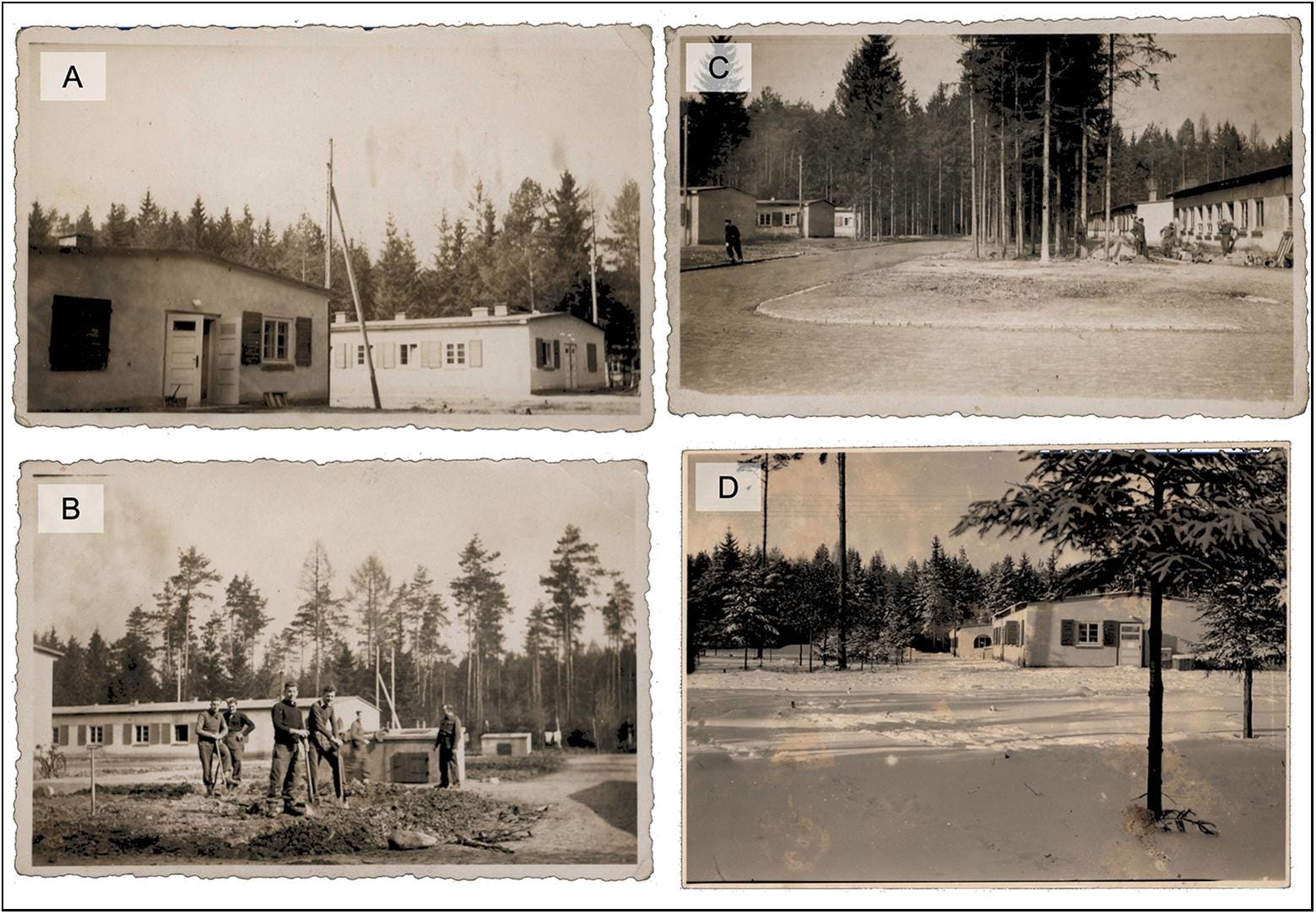
A total of 8,064 Germans were imprisoned at Lamsdorf after the war, where they were decimated through starvation, disease, hard labor and physical mistreatment.
A German doctor who survived the camp kept a record of the deaths.
According to his records, 6,488 of the 8,064 German prisoners died. That is more than 80% of the entire camp population.
And among those recorded deaths were 628 children.13
I want you to remember those numbers as you read what was submitted to the United States Senate on August 28, 1945:
In “Y” [code for a camp, from the original document], Upper Silesia, an evacuation camp has been prepared which holds at present 1,000 people….A great part of the people are suffering from symptoms of starvation; there are cases of tuberculosis and always new cases of typhoid….Two people seriously ill with syphilis have been dealt with in a very simple way: They were shot….Yesterday a woman from “K” [another camp] was shot and a child wounded.14
Then there was Zgoda, a former satellite camp of Auschwitz that was reopened after the war by the Polish Security Service and turned into a punishment and forced-labor camp.
Thousands of Germans living in Poland were arrested and sent there for labor duties. Inside, prisoners were denied adequate food and medical care, the overcrowded barracks were crawling with lice, and beatings were a regular occurrence.
The camps director, Salomon Morel, greeted prisoners at the gate by telling them that he was going to show them what Auschwitz had meant.
One of the men sent to Zgoda was Günther Wollny, who had the extraordinary misfortune of experiencing both Auschwitz and Zgoda as a prisoner.
So when Wollny later compared the two camps, he wasn’t speaking about something he had read in a history book. He had survived both of them.
And this is what he said:
I’d rather be 10 years in a German camp than one day in a Polish one.15
I keep my news, investigations, and analysis free and accessible to everyone. If you value my work, your support makes it possible for me to keep doing it. Please like, comment, share, and subscribe.
SEXUAL ASSAULTS IN POLISH CAMPS
Then there was what happened to the German women inside these postwar Polish camps.
Sexual assault was widespread but it went beyond rape. Female prisoners were also subjected to ritualized sexual humiliation and punishment inside the camps.
At Jaworzno, Antoni Białecki of the local Office of Public Security described the practice rather bluntly. Guards would:
take ethnically German women at gunpoint home at night and rape them.
The camp functioned as a sexual supermarket for its 170-strong militia guard contingent.
There were 170 militia guards stationed at Jaworzno, and the German women imprisoned there were treated as less than human.
By the end of 1945, the sexual humiliation of female prisoners at the Polish camp at Potulice had reportedly become an institutional practice. Many of the women were sexually abused and beaten, sometimes so brutally that the punishments left them with horrific injuries.
The sexual exploitation of women inside these Polish-run camps was in stark contrast to the treatment of women inside German concentration camps.
Rape and other forms of sexual mistreatment were extremely rare inside the German run camps and when authorities discovered that it had happened, those responsible faced severe punishment.16
I’m willing to bet that’s another part of concentration camp history most Americans have never heard before.
Efforts to actually hold the people running these camps accountable went almost nowhere.
Take Czesław Gęborski, the director of Lamsdorf. Polish authorities eventually indicted him in 1956 for his brutal treatment of German prisoners. And during his trial, Gęborski openly admitted why he had taken the job in the first place: “to exact revenge” on the Germans.
What happened under his command was horrific.
On October 4, 1945, a fire engulfed one of the prisoner barracks. Gęborski ordered his guards to shoot anyone who tried to escape the burning building. At least 48 prisoners were killed that day.
Guards routinely beat German prisoners and stole from them while hunger and disease tore through the camp. Guards themselves later recalled seeing starving children begging for scraps of food and crusts of bread.
So what happened to Gęborski?
Despite the strong evidence against him, he was found not guilty.17
I keep my news, investigations, and analysis free and accessible to everyone. If you value my work, your support makes it possible for me to keep doing it. Please like, comment, share, and subscribe.
CZECH-RUN CAMPS
After the war, Theresienstadt was transformed into a camp for German prisoners. On May 24, 1945, the Czech government sent 600 Germans from Prague there.
Within hours of arriving, between 59 and 70 of them were brutally beaten to death. Another 200 Germans died from torture and beatings over the next several days.
Camp commandant Alois Pruša took pleasure in the beatings and even used at least one of his daughters to help kill German prisoners.18

Torture was routine at Czech-run Theresienstadt. Prisoners were beaten with steel rods sheathed with leather, pipes, rubber truncheons, iron bars and wooden planks. One female prisoner remembered the screams of a female SS member who was forced to sit astride an SA dagger.
Even Dr. E. Siegel, a Czech-speaking doctor working for the Red Cross, was tortured. Siegel believed the abuse was being ordered from above because the same methods of torture were appearing across Czech-run camps.19
We now see the manifestations of hatred for the Germans. They [the Czechs] don’t kill them, but torment them like livestock. The Czechs look at them like cattle.
And the despair extended far beyond Theresienstadt. According to Czech statistics, 5,558 ethnic Germans committed suicide in 1946 alone.20
Even Dr. Hans Günther Adler, a Jew, who had himself been imprisoned at Theresienstadt during the war, later confirmed the horrific conditions Germans faced there after the war.
Adler wrote:
Certainly there were those among them who, during the years of occupation, were guilty of some infraction or other, but the majority, among them children and adolescents, were locked up simply because they were German. Just because they were German…? That phrase is frighteningly familiar; one could easily substitute the word “Jew” for “German.” The rags given to the Germans as clothes were smeared with swastikas. They were miserably undernourished, abused….The camp was run by Czechs, yet they did nothing to stop the Russians from going in to rape the captive women.21
After the war, the Red Cross confirmed that the sexual abuse of female prisoners in Czech-run camps had become widespread and systematic.
..treated like animals. Russian and Czech soldiers come in search of women for purposes which can be imagined. Conditions there for women are definitely more unfavorable than in the German concentration camps, where cases of rape were rare.
The Czech and Soviet soldiers were notorious for:
taking away the prettiest girls, who would often disappear without trace.
Starvation was another common feature of the Czech-run camps. In 1945 and 1946, the Czech government reportedly refused to increase food rations for ethnic German prisoners even when additional food was available.
I keep my news, investigations, and analysis free and accessible to everyone. If you value my work, your support makes it possible for me to keep doing it. Please like, comment, share, and subscribe.
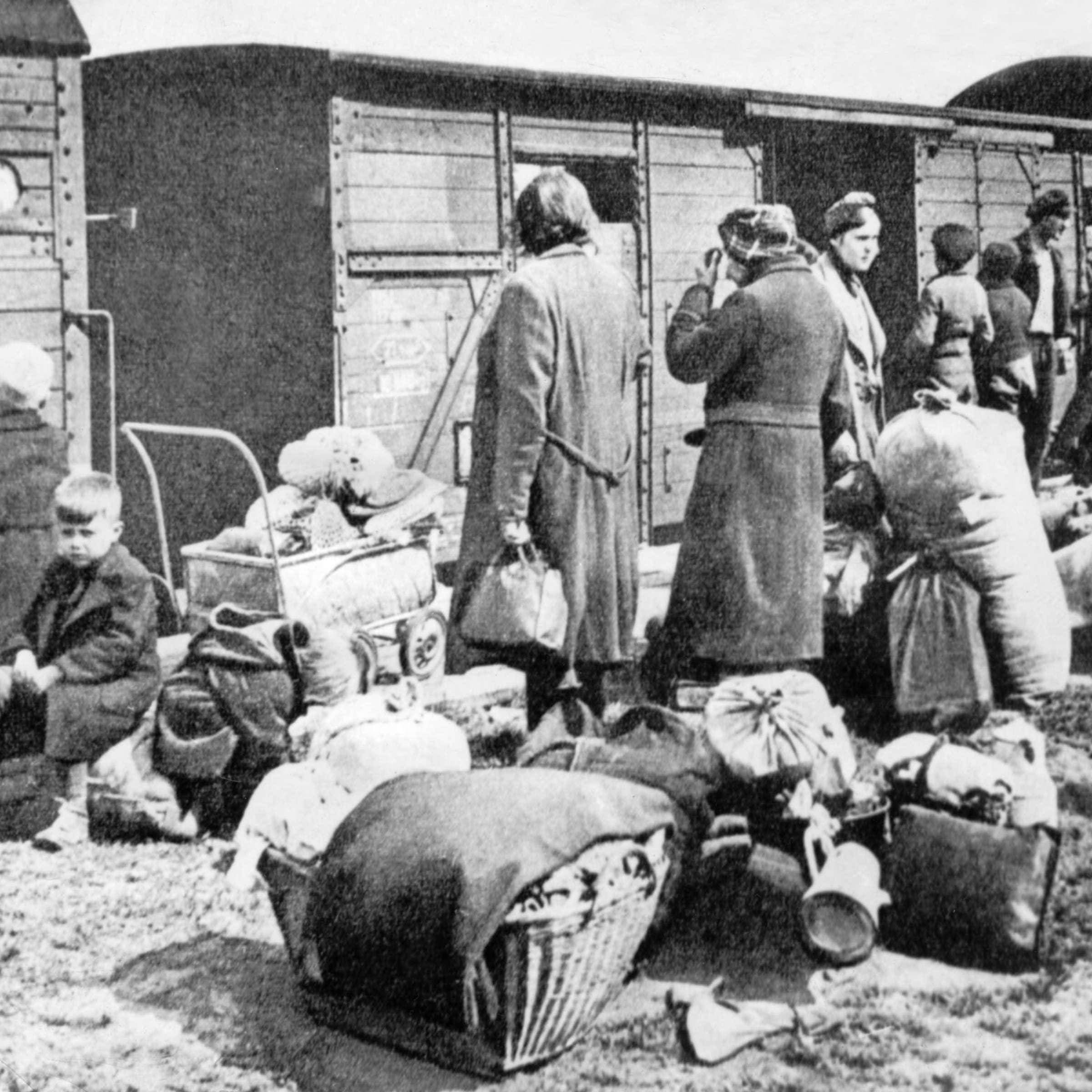
Prisoners were already dying from malnutrition at a rate of three per day when the Red Cross delivered 4.5 tons of food shortly before Christmas 1945. None of it was distributed to the prisoners. When British MP Richard Stokes visited the following year, he calculated that prisoners were receiving only 750 calories a day, which he described as “below Belsen level.”22
And starvation wasn’t the only issue. German prisoners at Svidník were forced to clear minefields, a practice that only ended after protests from the International Committee of the Red Cross.23
By March 1946, conditions had become serious enough that the ICRC formally urged the Czech government to end the provisional internment of Germans as soon as possible.24
So after everything we just went through, I think the reality is pretty difficult to ignore. German prisoners inside Soviet, Polish and Czech concentration camps after the war were subjected to unimaginable conditions including starvation, torture, beatings, sexual abuse and forced labor, and tens of thousands of them died.
And when you look at the conditions described throughout these records, there is a serious argument to be made that the treatment of prisoners inside some of these postwar camps was even worse than what prisoners experienced inside German-run concentration camps during World War II.
Yet how many of you even know these camps existed?
Relevant reading:


If you’re tired of being told everything is fine while it clearly isn’t, you’re exactly why this publication exists.
My work is 100% reader-supported. That means no advertisers, no political handlers, and no incentive to soften the truth.
I started this because too many people feel like they’re losing their minds trying to make sense of what’s happening, myself included. I wanted to build a space of like-minded people to make this journey feel less lonely for all of us.
To allow me to continue posting content just like this, please consider becoming a paid subscriber. I’m running a special for $40/year or $5/month.
If that price feels impossible to you, I understand. Share this article with everyone you know, it costs nothing but it matters more than you could possibly know.
I keep my news, investigations, and analysis free and accessible to everyone. If you value my work, your support makes it possible for me to keep doing it. Please like, comment, share, and subscribe.
This article was informed by the reporting and research of John Wear in Wears War. Portions of their reporting have been cited directly, paraphrased and incorporated alongside my own research, analysis, commentary, and additional sources. I encourage readers to read the original article here.
Douglas, R. M., Orderly and Humane: The Expulsion of the Germans After the Second World War, New Haven and London: Yale University Press, 2012, p. 136.
Suvorov, Viktor, The Chief Culprit: Stalin’s Grand Design to Start World War II, Annapolis, MD: Naval Institute Press, 2008, p. 279.
Naimark, Norman M., The Russians in Germany: A History of the Soviet Zone of Occupation, 1945-1949, Cambridge, MA and London: Harvard University Press, 1995, p. 377.
Weber, Mark, “Extermination Camps Propaganda Myths,” in Gauss, Ernst (ed.), Dissecting the Holocaust: The Growing Critique of Truth and Memory, Capshaw, AL: Thesis and Dissertations Press, 2000, p. 299.
Weber, Mark, “Extermination Camps Propaganda Myths,” in Gauss, Ernst (ed.), Dissecting the Holocaust: The Growing Critique of Truth and Memory, Capshaw, AL: Thesis and Dissertations Press, 2000, p. 299.
Suvorov, Viktor, The Chief Culprit: Stalin’s Grand Design to Start World War II, Annapolis, MD: Naval Institute Press, 2008, p. 279.
Weber, Mark, “Extermination Camps Propaganda Myths,” in Gauss, Ernst (ed.), Dissecting the Holocaust: The Growing Critique of Truth and Memory, Capshaw, AL: Thesis and Dissertations Press, 2000, p. 299.
Weber, Mark, “Extermination Camps Propaganda Myths,” in Gauss, Ernst (ed.), Dissecting the Holocaust: The Growing Critique of Truth and Memory, Capshaw, AL: Thesis and Dissertations Press, 2000, p. 298.
Naimark, Norman M., The Russians in Germany: A History of the Soviet Zone of Occupation, 1945-1949, Cambridge, MA and London: Harvard University Press, 1995, pp. 376, 378.
Weber, Mark, “Extermination Camp Propaganda Myths,” in Gauss, Ernst (ed.), Dissecting the Holocaust: The Growing Critique of Truth and Memory, Capshaw, AL: Thesis and Dissertations Press, 2000, p. 299.
Merten, Ulrich, Forgotten Voices: The Expulsion of the Germans from Eastern Europe after World War II, New Brunswick and London: Transaction Publishers, 2012, pp. 9, 65.
Public Record Office, FO 371/46990.
De Zayas, Alfred-Maurice, Nemesis at Potsdam: The Anglo-Americans and the Expulsion of the Germans, London: Routledge & Kegan Paul, 1977, pp. 125-126.
“Evacuation and Concentration Camps in Silesia” in Congressional Record, Senate, Aug. 2, 1945, Annex A-4778/79.
Lowe, Keith, Savage Continent: Europe in the Aftermath of World War II, New York: St. Martin’s Press, 2012, pp. 135-137.
Douglas, R. M., Orderly and Humane: The Expulsion of the Germans After the Second World War, New Haven and London: Yale University Press, 2012, pp. 141-142.
Naimark, Norman M., Fires of Hatred: Ethnic Cleansing in Twentieth-Century Europe, Cambridge, MA and London: Harvard University Press, 2001, p. 130.
MacDonogh, Giles, After the Reich: The Brutal History of the Allied Occupation, New York: Basic Books, 2007, pp. 153-154.
MacDonogh, Giles, After the Reich: The Brutal History of the Allied Occupation, New York: Basic Books, 2007, pp. 154, 157.
Naimark, Norman M., Fires of Hatred: Ethnic Cleansing in Twentieth-Century Europe, Cambridge, MA and London: Harvard University Press, 2001, p. 118.
De Zayas, Alfred-Maurice, A Terrible Revenge: The Ethnic Cleansing of the East European Germans, 2nd edition, New York: Palgrave Macmillan, 2006, p. 97.
Douglas, R. M., Orderly and Humane: The Expulsion of the Germans After the Second World War, New Haven and London: Yale University Press, 2012, pp. 144, 151-152.
International Committee of the Red Cross, Reports of its Activities during the Second World War, Geneva: 1948, Vol. 1, pp. 334, 675f.
De Zayas, Alfred-Maurice, Nemesis at Potsdam: The Anglo-Americans and the Expulsion of the Germans, London: Routledge & Kegan Paul, 1977, p. 125.
Keep shining light on the truth, Maddie. Hopefully one day our history books will be accurate. History keeps repeating due to the victors controlling the narrative...
Btw, reminder not to use Insta for direct messages as they stopped encrypting messaging in May... I recommend if you use WhatsApp that you use an alias to keep your phone number private. From what I understand the content of WhatsApp messages are generally private, but Meta can use the meta data (no pun intended) to know who you communicate with and got his long and what groups your in (?), and potentially your general location... I had been recommending people use Signal until I saw a recent interview with Kim Dotcom and he laughed when asked about it, replying it's one of the worst! 🤔
Text SIGN PLIDUI to 50409 to send the following message to your members of Congress:
Congress: End $3.3 Billion in Annual Military Aid to Israel—Put America First
Dear Member of Congress,
I strongly urge you to work to end the $3.3 billion in annual U.S. military aid to Israel. The Senate is now considering appropriations legislation, making this an urgent opportunity to stop sending American taxpayer dollars to finance another nation's military.
Americans face rising costs and a national debt exceeding $40 trillion. Taxpayers should not be required to finance the military of any foreign nation.
For Christians, this is also a moral issue. Jesus taught us to be peacemakers, love our neighbors, and care for "the least of these."
If the children of Gaza were our children, would we still support sending more weapons?
The UN, humanitarian organizations, and volunteer medical professionals have documented immense suffering among Palestinian children, including deaths, life-altering injuries, amputations, and the loss of parents and entire families.
Supporting an end to military aid is not anti-Israel or anti-Jewish. It is a pro-America position that respects taxpayers and the sovereignty of other nations. Israel has one of the world's strongest militaries and can fund its own defense.
The Bible does not command American taxpayers to finance foreign governments or wars. Faithfulness to God is measured by justice, mercy, truth, and love.
Please work to end the $3.3 billion in annual military aid to Israel and stand for fiscal responsibility, peace, and the protection of innocent human life.
Thank you for your service and consideration.
. .. ... ..... .... .... .. . ... ....